
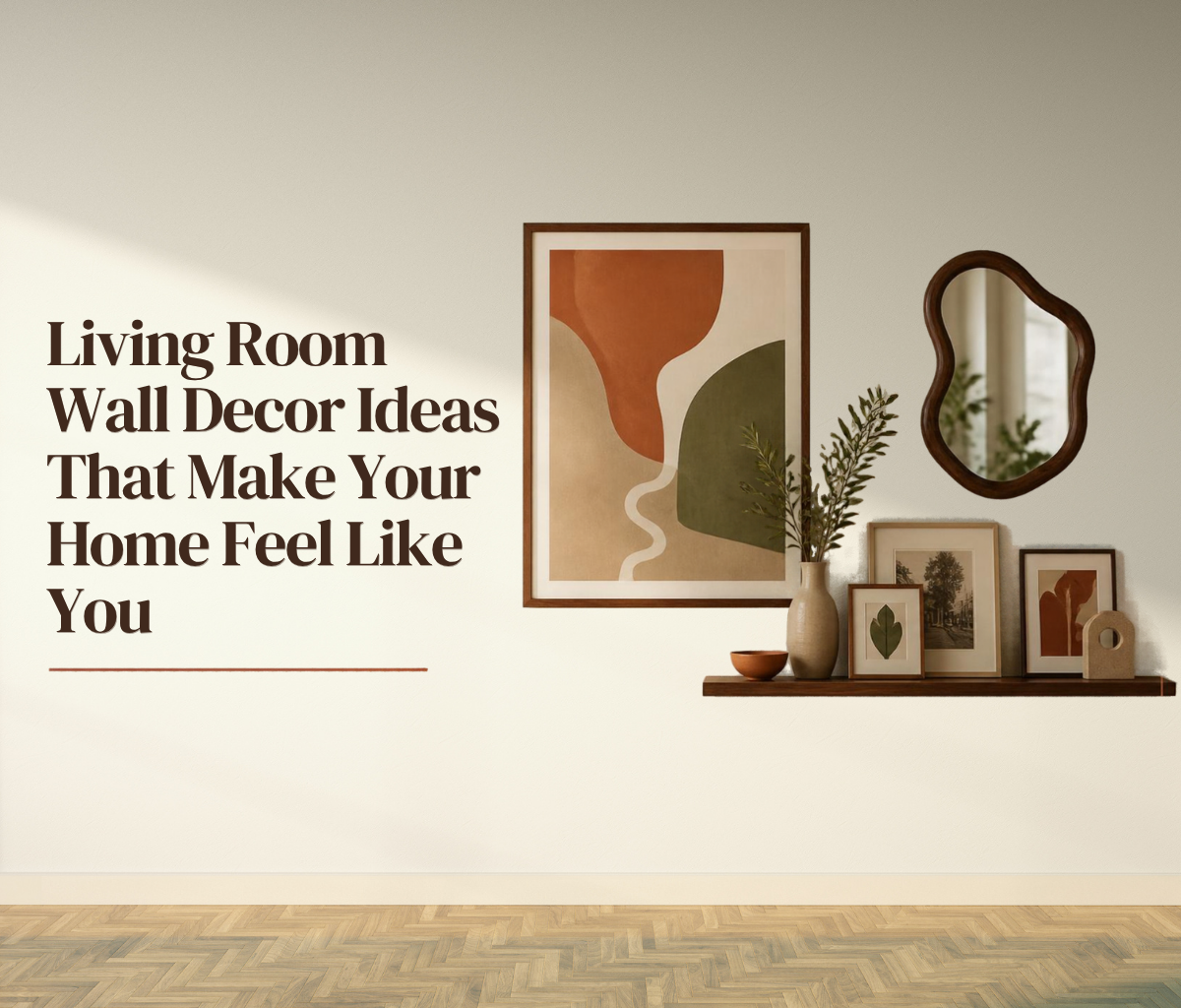
Living Room Wall Decor Ideas That make Your Home Feel Like You
Living Room Wall Decor Ideas That Make Your Home Feel Like You
Think about the last time you walked into a living room and felt instantly at ease. Chances are it wasn't the sofa that did it. It was the walls. A good wall tells you who lives in a home before anyone says a word.
Yet the living room wall is also the one that gets ignored the longest. We buy the sofa, pick the curtains, argue over the rug, and then stare at a bare wall for a year because we're not sure what belongs there.
If that sounds familiar, this guide is for you. We'll walk through practical living room wall decor ideas, how to choose the right size and height, and a few mistakes worth avoiding, all in plain language and without the design jargon.
Start With the Wall, Not the Art
Before you shop for anything, spend five minutes just looking at your wall. Ask yourself three simple questions.
What is this wall's job? A wall behind the sofa is usually the main stage, so it can carry something bold. A side wall near a window might just need a little softness. The wall opposite your seating is what everyone sees while they relax, so it deserves some thought too.
How much light does it get? Wall decor behaves differently in bright and dim rooms. A dark, textured panel can look rich in a sunny room and heavy in a dim one. Soft, light tones can open up a small space but may disappear in strong daylight.
What do you want people to feel? Calm, cosy, playful, polished? Decide the feeling first, and the choices that follow get much easier.
Wall Decor Ideas for Living Room Spaces of Every Size
There is no single right answer here. Here are the approaches we see working again and again in real homes.
One Large Statement Piece
If you want the simplest route to a finished look, go big with a single piece of living room wall art. A large painting, an oversized print or a framed textile can anchor the entire room and keep things from feeling busy.
The most common mistake is going too small. A tiny frame floating over a big sofa looks lost. As a rough guide, interior stylists suggest your art should be around two thirds the width of the furniture beneath it. City Furniture gives an easy example in its guide to hanging wall art: a sofa about nine feet wide pairs well with art about six feet wide.
A Gallery Wall With Personality
A gallery wall is the best way to make a living room feel lived in. Family photographs, travel prints, small canvases, sketches and even a few objects can sit together and tell a story that no single store-bought piece can.
The trick is to treat the whole group as one big artwork. The team at The DIY Playbook makes this point nicely in their post on hanging art at right height: keep the frames close together so the collection feels connected rather than scattered.
Want to avoid unnecessary nail holes? Cut paper to the size of each frame, tape the shapes to the wall and move them around until the layout feels right. Wayfair suggests the same painter's tape and paper outline method in its wall art size placement guide.
Mirrors That Do Double Duty
A mirror is wall decor that also works. It bounces light around, makes a compact living room feel larger and adds a soft, finished look. Round mirrors soften a room full of straight lines, while tall arched ones add a touch of drama. Place one where it can catch light from a window, and you will notice the difference by evening.
Floating Shelves and Layered Displays
Not everything has to be hung flat. Floating shelves let you mix art, books, small plants and favourite objects, and they are easy to change when your mood or the season changes. The advantage is flexibility. You can lean a frame against the wall, swap it next month and nobody has to touch a drill again.
Keep the styling loose. A few items with different heights and a little breathing space look better than a shelf crammed edge to edge.
Textured Panels and Wall Finishes
If you prefer a quieter, more architectural look, think about modern wall decor that lives in the wall itself. Fluted panels, wood slats, wallpaper with a subtle weave, lime plaster and stone cladding all add depth without needing a single frame.
These are especially good behind a TV unit or sofa, where a plain wall can feel flat. Because they are built in rather than added on, they usually need proper planning with your designer early, ideally before the electrical and furniture layout is finalised.
Colour, Paint and Simple Accent Walls
Never underestimate paint. A single accent wall in a deeper shade can turn an ordinary room into one that feels designed. Earthy greens, warm terracotta, soft ink blues and muted neutrals are all popular because they make other wall decoration ideas look richer when layered on top.
If you are unsure, test a few shades on a large sheet of card and watch them at different times of day before you commit.
Getting Size and Height Right
This is where good wall decor and awkward wall decor part ways. You can own beautiful pieces and still have a room that feels off simply because of placement.
Aim for eye level. The centre of your artwork should sit at about 60 inches from the floor, according to Studio McGee's art hanging guide. That keeps things consistent from room to room.
Mind the gap above furniture. City Furniture recommends leaving roughly four to six inches between the bottom of the frame and the top of your sofa or console, so the two read as one group rather than two separate things.
Do not hang art too high. This is probably the number one mistake in living rooms. High ceilings tempt us to lift everything upward, but art should relate to the furniture and the people in the room, not the ceiling.
Use a simple formula if you like numbers. Wayfair offers a handy shortcut: multiply your wall's height and width by 0.57 to get the ideal dimensions of the art or grouping you place there.
Matching Wall Decor to Your Style
You do not need to follow a strict design label, but a little direction helps.
- Minimal and modern: One or two large pieces, a clean frame, plenty of empty wall around them.
- Warm and traditional: Framed prints, brass accents, carved wood or handcrafted pieces with a story behind them.
- Bold and eclectic: Mixed frame colours, layered textures and a gallery wall that fills most of the space.
- Soft and earthy: Woven wall hangings, wooden shelves, muted colours and a few plants nearby.
The best rooms usually borrow from more than one of these. Let your own taste lead.
Common Mistakes to Avoid
A few small habits can quietly spoil a nice wall.
- Buying art before measuring the wall.
- Spreading frames too far apart, so the group feels scattered.
- Choosing decor that matches the sofa perfectly instead of complementing it.
- Filling every inch of wall. Empty space is part of the design.
- Ignoring lighting. A good picture light or wall sconce can lift a piece far more than a new frame.
When It Is Worth Bringing in a Designer
Plenty of wall decor can be a weekend project. But if you are planning textured panels, a TV wall unit, concealed lighting or a full living room makeover, a professional can save you from expensive second tries. A designer thinks about the wall, the lighting, the furniture and the flow of the whole room together, which is hard to do on your own.
If you would like help turning a blank wall into something you actually love, you can explore the work and services at Royal Crafts and see how a thoughtful design process shapes a home from the walls out.